Comparison
Prius vs Camry Hybrid for Rideshare: Cheaper Miles or Better Ratings?
Prius if you drive Uber X exclusively. Camry Hybrid the moment Comfort surge is available in your market.
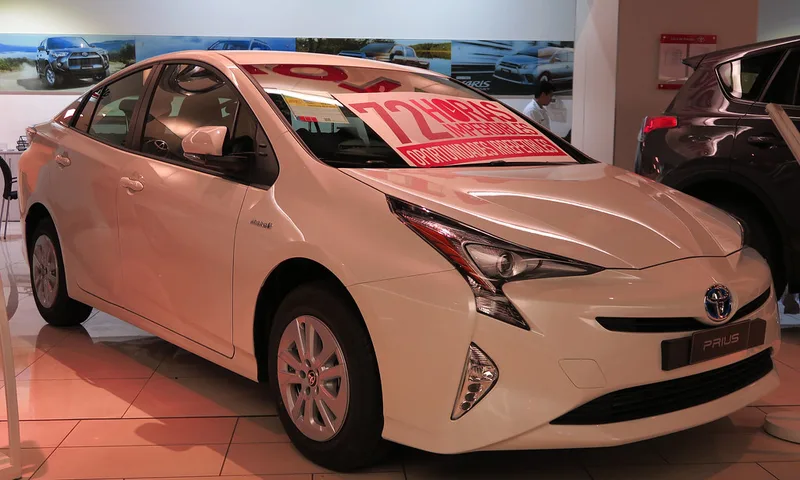
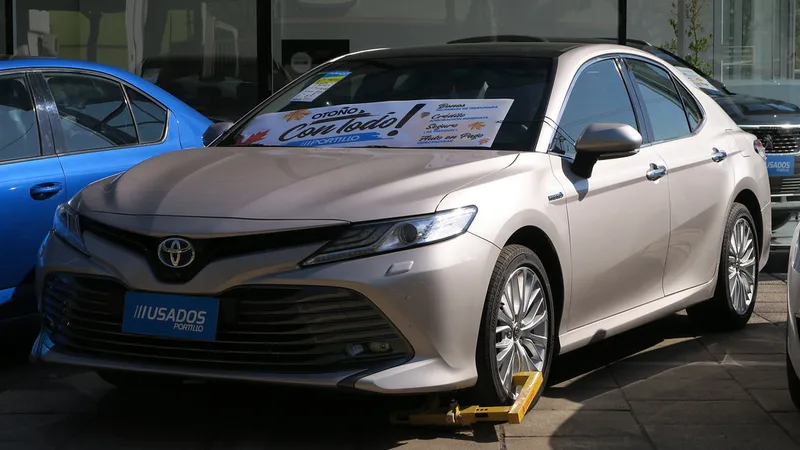
- Energy 7.9¢/mi
- Maintenance 2.7¢/mi
- Depreciation 9.8¢/mi
- Energy 7.9¢/mi
- Maintenance 2.9¢/mi
- Depreciation 12.0¢/mi
Energy, maintenance and depreciation only, at $4.08/gal. Insurance, registration and any car payment sit on top — add yours in the cost per mile calculator.
| Spec | Toyota Prius | Toyota Camry Hybrid |
|---|---|---|
| Combined MPG | 52 | 52 |
| kWh / 100 mi | — | — |
| Used price range | $11,360–$20,150 | $13,290–$24,100 |
| Maintenance per year | $408 | $442 |
| Seats | 5 | 5 |
| Cargo (cu ft) | 27.4 | 15.1 |
| Rear legroom (in) | 33.4 | 38 |
| Uber X | Yes | Yes |
| Uber Comfort | No | Yes |
| Uber XL | No | No |
Sources: Toyota Prius — EPA fuel economy, maintenance estimates, used price guide, Uber vehicle requirements ; Toyota Camry Hybrid — EPA fuel economy, maintenance estimates, used price guide, Uber vehicle requirements . Updated 2026-08-27.
The short answer
Both cars share the same 52 mpg combined rating, so the gap between them is not a fuel story. It is a depreciation-and-eligibility story. The Prius runs at 20.4 cents a mile all-in against the Camry Hybrid’s 22.8 cents, a 2.4-cent-a-mile spread that comes almost entirely from depreciation, not the pump. In exchange for that extra 2.4 cents, the Camry Hybrid clears Uber Comfort. The Prius does not, and never will on Uber’s own eligibility listing — that ceiling is fixed to this body and interior, not to running on a battery and a gas engine. Whether the trade is worth it depends on how often Comfort fares actually come up in a given market, a number this dataset does not track.
Cost per mile
Fuel is a wash: 52 mpg combined on both cars, at $4.085 a gallon, works out to about 7.9 cents a mile for each. The separation shows up below the fuel line. The Prius costs 2.7 cents a mile in maintenance and 9.8 cents a mile in depreciation; the Camry Hybrid costs 2.9 cents and 12.0 cents respectively. Add it up and the Prius lands at 20.4 cents a mile total, the Camry Hybrid at 22.8 cents — a 2.4-cent-a-mile difference, almost all of it (2.2 of the 2.4 cents) sitting in depreciation rather than maintenance.
Scaled to a full-time driver’s 30,000-mile year, that 2.4-cent gap becomes $720 a year: the Prius runs about $6,107 a year in fuel, maintenance, and depreciation combined, the Camry Hybrid about $6,827. Measured against the current 76-cent IRS mileage rate, the Prius’s real cost is covered 3.73 times over; the Camry Hybrid’s is covered 3.34 times over. Both numbers describe a car that is cheap to run relative to the federal benchmark — the Camry Hybrid is just less cheap than the Prius specifically.
Depreciation is also where each car’s cost is concentrated. It is 48.1 percent of the Prius’s total per-mile cost and 52.7 percent of the Camry Hybrid’s — for both cars, the used-car market matters more to the final number than the gas station does. That is one more reason the used-price range matters as much as the mpg sticker: this Prius generation runs $11,360 to $20,150 used, and this Camry Hybrid generation runs $13,290 to $24,100 — the Camry Hybrid costs more to buy at both the low and high end of its range, on top of costing more per mile to run.
What Uber Comfort is worth
Here is the trade the numbers actually describe. The Prius is rated for Uber X only; it is not rated for Comfort or XL on Uber’s own vehicle-eligibility listing, and that lockout is permanent short of buying a different car. The Camry Hybrid, at the same 52 mpg, clears Comfort. Comfort trips route to a higher-paying tier of the platform, but this dataset has no fare data — no Comfort surcharge, no trip-mix percentage, nothing that turns “clears Comfort” into a dollar figure. What can be said with the numbers on hand is only the cost side: qualifying for Comfort here costs about 2.4 cents a mile, or $720 a year at full-time mileage, in extra depreciation and maintenance relative to the Prius. Whether that $720 comes back with interest depends entirely on how much Comfort-tier volume actually exists in a driver’s market and how often it gets assigned — figures a driver has to bring from their own trip history, not from a spec sheet.
Space, comfort, ratings
The Camry Hybrid’s rear seat is the more generous one: 38.0 inches of rear legroom against the Prius’s 33.4 inches, a 4.6-inch gap that matters most on longer Comfort-style trips where a rear-seat passenger notices legroom. The Prius wins the other space category outright — 27.4 cubic feet of hatchback cargo against the Camry Hybrid’s 15.1-cubic-foot trunk, a 12.3-cubic-foot gap in the Prius’s favor. A hatchback’s cargo area and a sedan’s trunk are different shapes doing different jobs; the Prius’s is simply bigger. Both cars seat five, so neither one changes what a driver can legally carry, only how comfortably and how much luggage fits behind the back seat.
Break-even
Running both cars through the break-even calculator surfaces something worth saying plainly: that tool is built to find the mileage where a car that is cheaper to buy but pricier to run catches up with one that is pricier to buy but cheaper to run. That crossing does not exist here, because the Prius is cheaper on both axes — cheaper to buy across its whole used-price range and cheaper to run per mile. Feed in the two cars’ cost-per-mile and purchase-price figures from the spec tables above and the calculator should report no break-even, with the Prius ahead at every mileage. That is exactly what the tool is designed to say when one car simply wins on cost; it is not a bug or an edge case. The real decision here is not a cost break-even at all — it is whether Comfort-tier access is worth paying a flat 2.4 cents a mile more, a question the rideshare profit calculator can help answer once a driver plugs in their own Comfort trip mix and fares.
Which one to buy
A driver working Uber X or delivery exclusively, with no plans to chase Comfort fares, should buy the cheaper car on every measure: the Prius. It costs less to buy, costs 2.4 cents a mile less to run, and has more cargo room for it. The Camry Hybrid earns its extra cost back only if Comfort trips are common enough in a driver’s specific market to matter — a driver who already knows their Comfort volume is high, or who wants the option open without switching cars later, is paying $720 a year for that option. Read the full breakdown of each car’s numbers in the Toyota Prius review and the Toyota Camry Hybrid review.