Review
Toyota Prius for Rideshare: The Numbers Behind the Reputation
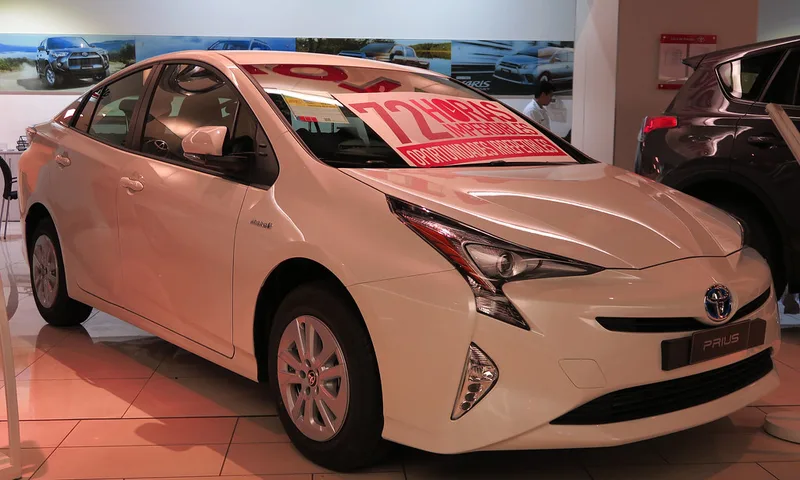
The cheapest way to rack up rideshare miles in the U.S., as long as you never need Uber Comfort or XL.
- Energy 7.9¢/mi
- Maintenance 2.7¢/mi
- Depreciation 9.8¢/mi
Energy, maintenance and depreciation only, at $4.08/gal. Insurance, registration and any car payment sit on top — add yours in the cost per mile calculator.
| Spec | Toyota Prius |
|---|---|
| Combined MPG | 52 |
| kWh / 100 mi | — |
| Used price range | $11,360–$20,150 |
| Maintenance per year | $408 |
| Seats | 5 |
| Cargo (cu ft) | 27.4 |
| Rear legroom (in) | 33.4 |
| Uber X | Yes |
| Uber Comfort | No |
| Uber XL | No |
Sources: EPA fuel economy, maintenance estimates, used price guide, Uber vehicle requirements . Updated 2026-08-27.
Where the Prius wins
For a rideshare driver, cost per mile matters more than any other figure this car has. On the generation this listing covers — 2016 through 2022 — Toyota rates it at 52 mpg combined, and at $4.085 a gallon, the fuel price this site’s calculators use everywhere, that works out to about 7.9 cents of fuel for every mile driven. Add the 2.7 cents a mile this car costs in maintenance and the 9.8 cents a mile it costs in depreciation, and the three add up to roughly 20.4 cents a mile before insurance, tires, or a car payment enter the picture. That number is worth holding onto, because most of what follows measures something against it.
Twenty cents a mile only means something at scale, and a full-time driver’s scale, by this site’s working assumption, is 30,000 miles a year. Run the Prius’s mpg through that mileage and fuel alone comes to about $2,357 a year — roughly 577 gallons at $4.085. Total running cost — fuel, maintenance, and depreciation together — comes to about $6,107 a year. That is the floor this car has to clear before a mile driven for pay turns into a mile driven for profit, and it is a low floor: the current IRS standard mileage rate, 76 cents as of July 1, 2026, covers that real running cost 3.73 times over. Every car in this dataset gets measured against the same flat federal rate; few clear it by this much.
Depreciation, not fuel, does most of the damage here. At 9.8 cents against a 20.4-cent total, it is just under half of everything this car costs per mile — which is another way of saying the spread on the used-car lot matters more than the spread at the pump. This generation trades between $11,360 and $20,150 used, an $8,790 range, and a depreciation-driven cost model says the low end of that range is worth chasing far more than any trim feature that explains the high end.
Where it does not
The Prius is rated for Uber X. It is not rated for Uber Comfort, and it is not rated for Uber XL. That is not a footnote — Comfort and XL trips route to a higher-paying tier of the platform, and Uber’s own vehicle-eligibility page, the same source used for every car in this dataset, locks a Prius out of both permanently. It is worth saying plainly rather than leaving it as a checkbox in a spec table: whatever this car earns, it earns entirely inside the Uber X tier, with no upgrade path short of buying a different car. That is not a hybrid-wide penalty — a Toyota Camry Hybrid, rated at the same 52 mpg combined, does qualify for Comfort on that same Uber listing, so the Prius’s ceiling is specific to this body and interior, not to running on a battery and a gas engine.
The cabin is the other place it gives something back. Rear legroom of 33.4 inches is workable for a short hop but not generous for a long one, which is exactly the trip a Comfort or XL vehicle is built to win instead.
Passenger space and luggage
Cargo space is 27.4 cubic feet — enough, in practical terms, for two standard rolling suitcases and a couple of carry-ons stacked in behind them, which covers a solo or two-passenger airport run without folding a seat down. It stops being enough the moment three passengers show up with a week’s luggage between them; the same 27.4 cubic feet then has to swallow twice the bags, and something ends up riding on a lap. Five seats means the Prius can legally carry four passengers, but the back bench works better as a bench for two adults than three — 33.4 inches of rear legroom is the number that decides whether a middle-seat rider’s knees survive the trip, and at that measurement they mostly do for a short ride and mostly don’t for a long one.
Maintenance and the battery question
The published maintenance figure for this car is $408 a year, sourced to RepairPal. That number assumes a typical private driver’s mileage, not a gig driver’s. The per-mile rate this site models against instead — 2.7 cents — tells a different story once it is scaled to a full-time schedule: 2.7 cents times 30,000 miles comes to about $810 a year, roughly double the average owner’s bill, simply because a rideshare Prius covers two to three times the miles a typical owner does in the same twelve months. Neither number is wrong; they answer different questions, and a driver budgeting for full-time use should budget against the per-mile rate, not the yearly average built for someone driving far less.
The hybrid battery is the question every Prius review eventually has to answer, and the honest answer from this dataset is that there is no separate line item for it. The 2.7-cent maintenance rate comes from RepairPal’s estimate for this specific model and drivetrain, which folds in whatever battery-related service shows up across the fleet it is averaged from. It is an average, not a warranty: a driver who needs a replacement pack outside that average will pay well above 2.7 cents a mile in the year it happens, and no average predicts in advance which driver that will be.
Does it pay for itself?
At about $6,107 a year in fuel, maintenance, and depreciation for 30,000 miles, and with the current 76-cent IRS rate as a benchmark for what a business mile is nominally worth, whether this car pays for itself depends on fares and hours behind the wheel — numbers this dataset does not track. What it does support is the other half of that equation: the running cost that has to clear before a dollar of fare income becomes a dollar of profit. Feed the 20.4-cents-a-mile figure worked out above, or the combined mpg and per-mile maintenance and depreciation figures direct from the spec table, into the payback period calculator, and a purchase price anywhere in the $11,360–$20,150 used range turns into a number of weeks rather than an abstraction. Run the same figures through the rideshare profit calculator to see what a week of net earnings looks like once this car’s real running cost — not a gross fare number — comes out of it first.
One timing detail is worth flagging on its own. The IRS mileage rate moved from 72.5 cents in the first half of 2026 to 76 cents on July 1. That 3.5-cent step changes nothing about what this car costs to run, but it changes what a full 30,000-mile year is worth on a tax return: about $1,050 more at the new rate than the same mileage would have deducted before July.
Verdict
This car is a strong pick for a driver working Uber X or delivery exclusively, buying toward the bottom of the $11,360–$20,150 used range, and prioritizing a 20.4-cent-a-mile running cost over back-seat space. It is a weak pick for anyone chasing Comfort or XL fares — that gap is not fixable with an accessory or a detail job, it is built into which list the car sits on — or for a driver who regularly carries three adult passengers and a week of luggage, where 33.4 inches of rear legroom and 27.4 cubic feet of trunk stop being enough. A Camry Hybrid, at the same 52 mpg combined but qualified for Comfort, is the natural next car to run through this same math for a driver who wants the fuel economy without giving up the higher fare tier.