Comparison
Model 3 vs Prius for Rideshare: Comfort Access vs Cheaper to Own
Prius for the lowest total cost. Model 3 if Uber Comfort access in your market is worth a small per-mile premium and a real charging-time cost.

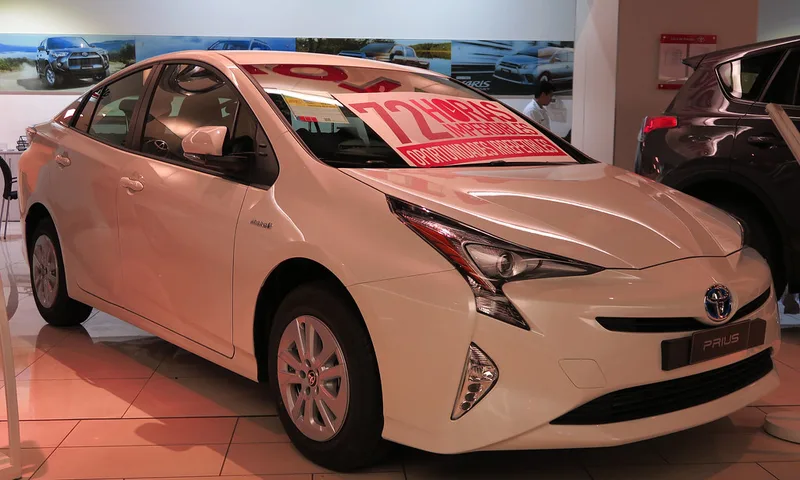
- Energy 4.3¢/mi
- Maintenance 2.4¢/mi
- Depreciation 14.0¢/mi
- Energy 7.9¢/mi
- Maintenance 2.7¢/mi
- Depreciation 9.8¢/mi
Energy, maintenance and depreciation only, at $4.08/gal and $0.18/kWh. Insurance, registration and any car payment sit on top — add yours in the cost per mile calculator.
| Spec | Tesla Model 3 | Toyota Prius |
|---|---|---|
| Combined MPG | — | 52 |
| kWh / 100 mi | 23.7 | — |
| Used price range | $17,200–$23,480 | $11,360–$20,150 |
| Maintenance per year | $358 | $408 |
| Seats | 5 | 5 |
| Cargo (cu ft) | 15 | 27.4 |
| Rear legroom (in) | 35.2 | 33.4 |
| Uber X | Yes | Yes |
| Uber Comfort | Yes | No |
| Uber XL | No | No |
Sources: Tesla Model 3 — EPA fuel economy, maintenance estimates, used price guide, Uber vehicle requirements ; Toyota Prius — EPA fuel economy, maintenance estimates, used price guide, Uber vehicle requirements . Updated 2026-08-27.
The short answer
These two are closer on running cost than any other pair in this dataset: 20.7 cents a mile for the Model 3, 20.4 cents for the Prius, a gap of about four-tenths of a cent once the underlying figures are compared precisely rather than the displayed one-decimal totals. What actually separates them is eligibility and ownership shape, not the pump-versus-plug story a driver might expect. The Model 3 clears Uber Comfort; the Prius is Uber X only, permanently, on Uber’s own listing. The Prius costs thousands less to buy. And the Model 3 carries a cost neither this dataset nor its running-cost model can price: time spent charging instead of driving for pay.
Cost per mile
The Model 3 runs on electricity, not gasoline: at 23.7 kWh per 100 miles and $0.1834 per kilowatt-hour, energy costs about 4.3 cents a mile, well under the Prius’s 7.9-cent fuel cost at 52 mpg combined and $4.085 a gallon. That energy advantage is real, but it does not carry through to the bottom line. The Model 3 costs 2.4 cents a mile in maintenance against the Prius’s 2.7 cents — still a Model 3 edge — but 14.0 cents a mile in depreciation against the Prius’s 9.8 cents, a 4.2-cent-a-mile gap that erases the energy savings and then some. Total cost per mile: 20.7 cents for the Model 3, 20.4 cents for the Prius.
At a full-time driver’s 30,000 miles a year, that turns into $6,224 for the Model 3 and $6,107 for the Prius — a $117 annual difference, small in absolute terms next to how differently the two cars get there. The current 76-cent IRS mileage rate covers the Model 3’s real cost 3.66 times over and the Prius’s 3.73 times over — both comfortable margins over the federal benchmark, with the Prius very slightly ahead. Depreciation dominates the Model 3’s cost structure far more than it does the Prius’s: 67.5 percent of the Model 3’s total per-mile cost, the highest depreciation share of any vehicle in this dataset, against 48.1 percent for the Prius.
Uber Comfort and the eligibility gap
This is where the two cars actually diverge. The Model 3 clears Uber Comfort on Uber’s own vehicle-eligibility listing; the Prius does not and cannot, regardless of trim or model year — that ceiling is fixed to the car’s body and interior, the same way it is for every Prius reviewed on this site. Both qualify for Uber X. Neither clears Uber XL. So a driver choosing between these two is choosing between a car that opens the Comfort tier for roughly four-tenths of a cent a mile more, and a car that is locked to Uber X forever but costs less to buy outright. This dataset has no Comfort fare premium or trip-mix data, so the value of that access has to come from a driver’s own market, not from anything in these numbers.
Charging time — the cost this model can’t price
The Prius refuels in minutes at any gas station. The Model 3 charges, and charging time is time a car is plugged in rather than earning fares — a real cost with no figure attached anywhere in this dataset’s cost-per-mile or annual-cost model, the same way this site does not track fares or hours behind the wheel. A driver relying on a home Level 2 charger overnight may see close to zero of this cost show up during driving hours; a driver relying on public DC fast charging during a shift will lose real earning time to it, and how much depends on charger availability and speed in that driver’s specific area — variables this dataset does not model. Anyone weighing these two cars should treat that gap as a real line item, not a footnote, even though no number here can fill it in.
Space, comfort, price
The Model 3 has a slight edge in rear legroom — 35.2 inches against the Prius’s 33.4, a 1.8-inch gap — while the Prius wins cargo space by a wide margin: 27.4 cubic feet in the hatchback’s cargo area against 15.0 cubic feet in the Model 3’s sedan trunk, a 12.4-cubic-foot gap in the Prius’s favor. Price is the more decisive difference. This Model 3 generation runs $17,200 to $23,480 used; this Prius generation runs $11,360 to $20,150 — the Prius is cheaper at both the low and high end of its range, by $5,840 at the floor and $3,330 at the ceiling.
Which one to buy
Running these two through the break-even calculator with the Prius’s lower purchase price and lower cost per mile should return no crossover — the Prius wins on both axes here, the same way it does against the Camry Hybrid, just by a much smaller per-mile margin. That makes the Prius the lower-total-cost pick for a driver who does not need Comfort access. The Model 3 only pulls ahead once Comfort-tier fares in a given market are worth more than roughly $117 a year plus whatever charging downtime actually costs that driver — a calculation this dataset can flag but not finish. Full breakdowns of both cars are in the Tesla Model 3 review and the Toyota Prius review.