Review
Tesla Model 3 for Rideshare: An EV That Also Clears Uber Comfort
Uber Comfort eligibility at 20.7 cents a mile — close to Prius money, with a fare tier the Prius cannot reach.
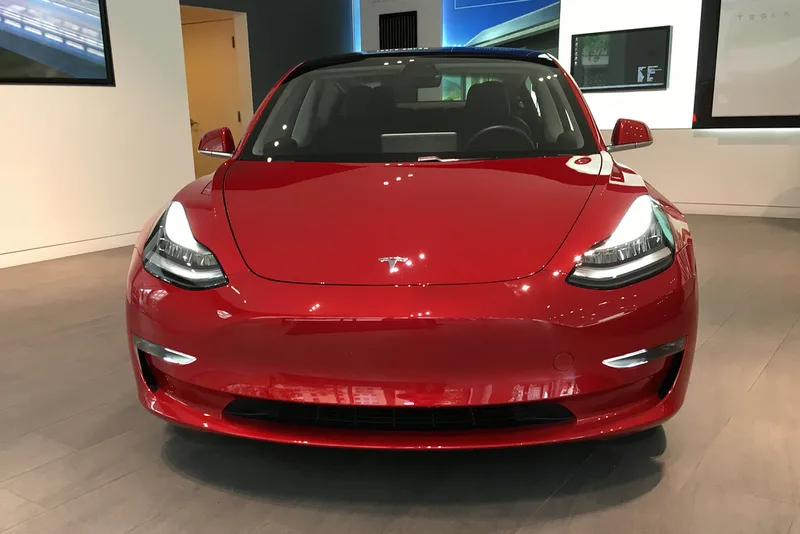
- Energy 4.3¢/mi
- Maintenance 2.4¢/mi
- Depreciation 14.0¢/mi
Energy, maintenance and depreciation only, at $0.18/kWh. Insurance, registration and any car payment sit on top — add yours in the cost per mile calculator.
| Spec | Tesla Model 3 |
|---|---|
| Combined MPG | — |
| kWh / 100 mi | 23.7 |
| Used price range | $17,200–$23,480 |
| Maintenance per year | $358 |
| Seats | 5 |
| Cargo (cu ft) | 15 |
| Rear legroom (in) | 35.2 |
| Uber X | Yes |
| Uber Comfort | Yes |
| Uber XL | No |
Sources: EPA fuel economy, maintenance estimates, used price guide, Uber vehicle requirements . Updated 2026-08-27.
Where the Model 3 wins
The Model 3 is the second electric vehicle in this dataset, and it pairs an EV’s low energy cost with something no other Uber X-eligible economy car reviewed on this site can also claim: Uber Comfort eligibility. On Uber’s own listing, this car qualifies for both Uber X and Uber Comfort, the same combination the Camry Hybrid and Accord Hybrid offer, but reached here through a 23.7 kWh-per-100-mile rating instead of a gas mpg figure.
At $0.1834 per kilowatt-hour — the residential electricity price this site’s calculators use everywhere — that rating works out to about 4.3 cents a mile in energy cost, cheaper than the Prius’s 7.9-cent fuel cost and roughly half the Camry Hybrid’s or Accord Hybrid’s fuel bill. Add 2.4 cents a mile in maintenance and 14.0 cents a mile in depreciation, and the total comes to roughly 20.7 cents a mile — within four-tenths of a cent of the Prius’s 20.4, but with Comfort-tier fare access the Prius does not have. Annual energy cost at a full-time driver’s 30,000-mile year comes to about $1,304 — 7,110 kWh at $0.1834. Total running cost for the same year comes to about $6,224, and the current 76-cent IRS mileage rate clears that 3.66 times over.
Where it does not
This car is not rated for Uber XL — the same limitation every Comfort-eligible sedan in this dataset carries — so a driver’s ceiling here is Comfort, not XL group rides. Depreciation of 14.0 cents a mile is the largest single cost this car carries, at 67.5 percent of the 20.7-cent total — the highest depreciation share of any vehicle in this dataset, meaning more of what this car costs per mile comes from resale value slipping away than from any other vehicle reviewed here. The used-price range, $17,200 to $23,480, is a $6,280 spread — narrower than the Camry Hybrid’s $10,810, but starting from a higher floor than every hybrid sedan in this dataset.
Cargo space of 15 cubic feet is close to the Camry Hybrid’s 15.1 and the smallest among the Comfort-eligible cars in this dataset. Rear legroom of 35.2 inches trails every Comfort-eligible sedan reviewed here — well behind the Accord Hybrid’s 40.4 and the Camry Hybrid’s 38.0 — which is worth noting for a car whose fare tier specifically routes toward passengers expecting a roomier back seat.
Charging time: the gap this dataset doesn’t fill
Every cost figure above treats the Model 3’s 7,110 kWh a year as if it simply appears at $0.1834 per kWh, the same way this dataset treats a tank of gas appearing in minutes at a pump. It does not work that way, and this dataset has no field that says how it does: no charging speed, no charger-network availability, no minutes or hours spent plugged in instead of earning a fare. A driver weighing this car against a Camry Hybrid or Accord Hybrid — its closest Comfort-eligible rivals on running cost — needs to add that time cost themselves, in whatever unit matters most to their own schedule, because this site’s numbers cannot supply it. Naming that gap plainly is the more honest move than filling it with an unsourced minutes-per-charge estimate.
Maintenance and the battery question
The published maintenance estimate is $358 a year, sourced to RepairPal and built around a typical private driver’s mileage. Scaled to this site’s 2.4-cent-a-mile rate instead, a full-time 30,000-mile year comes to about $720 — almost exactly double the published figure, the same scaling pattern every vehicle in this dataset shows once mileage moves from a typical owner’s use to a full-time driver’s.
The traction battery question gets the same honest answer here as the hybrid battery question does throughout this dataset: there is no separate line item for it. The 2.4-cent rate is RepairPal’s average across whatever mix of ordinary and battery-related service its sample includes for this model. It is an average, not a warranty — a driver whose pack degrades or needs replacement outside that average pays well above 2.4 cents a mile in the year it happens, and no average in this dataset predicts which driver that will be.
Does it pay for itself?
At about $6,224 a year in energy, maintenance, and depreciation for 30,000 miles, whether the Model 3 pays for itself depends on fares and hours behind the wheel — numbers this dataset does not track — and, specific to this car, on the charging-time cost described above, which this dataset also does not track. What the figures do supply is the running-cost half of the question: 20.7 cents a mile, or the kWh-per-100-miles figure with the maintenance and depreciation rates straight from the spec table, is what a payback-period calculation needs before a purchase price in the $17,200-$23,480 range turns into a concrete number of weeks. The same figure, run through a rideshare profit calculation, turns a gross fare number into something closer to what a driver actually keeps once energy, maintenance, and depreciation come out of it — with Comfort fares, which this car alone among the EVs in this dataset can take, folded into that gross figure at whatever rate a driver’s market pays for them.
The IRS mileage rate moved from 72.5 cents in the first half of 2026 to 76 cents on July 1 — a 3.5-cent step that changes nothing about what this car costs to run but adds about $1,050 to what a full 30,000-mile year is worth on a tax return compared with the earlier rate.
Verdict
The Model 3 is a strong pick for a driver who wants Uber Comfort eligibility at a running cost close to the cheapest cars in this dataset, and who can absorb charging time into their schedule in a way this dataset cannot quantify. It is a weaker pick for a driver who needs more rear legroom or cargo space than 35.2 inches and 15 cubic feet provide, since the Camry Hybrid and Accord Hybrid both beat it on both measures while matching its Comfort eligibility. A direct comparison against the Bolt EV, the other EV in this dataset, is the clearest next read for a driver weighing this car’s Comfort access and higher depreciation against the Bolt EV’s lower running cost and Uber X-only ceiling.