Comparison
Kia Niro vs Prius: Lowest Price Floor vs Lowest Cost Per Mile
Niro for the lowest possible entry price. Prius for total cost past roughly 48,000 to 82,000 miles, where its lower running cost overtakes the discount.
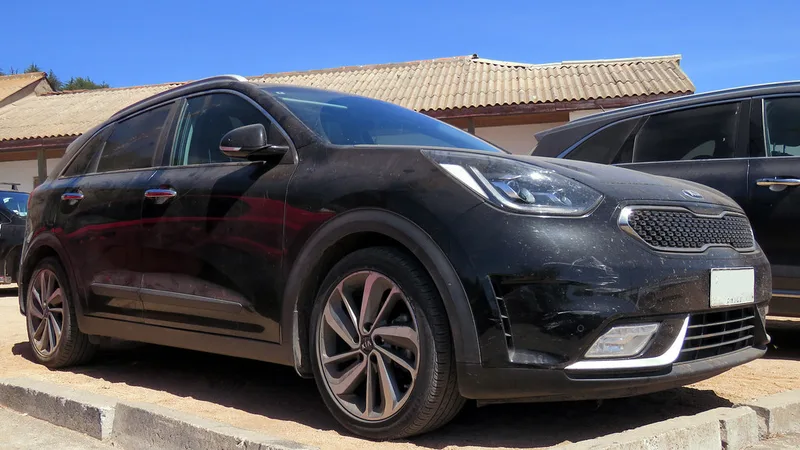
- Energy 8.3¢/mi
- Maintenance 2.5¢/mi
- Depreciation 13.5¢/mi
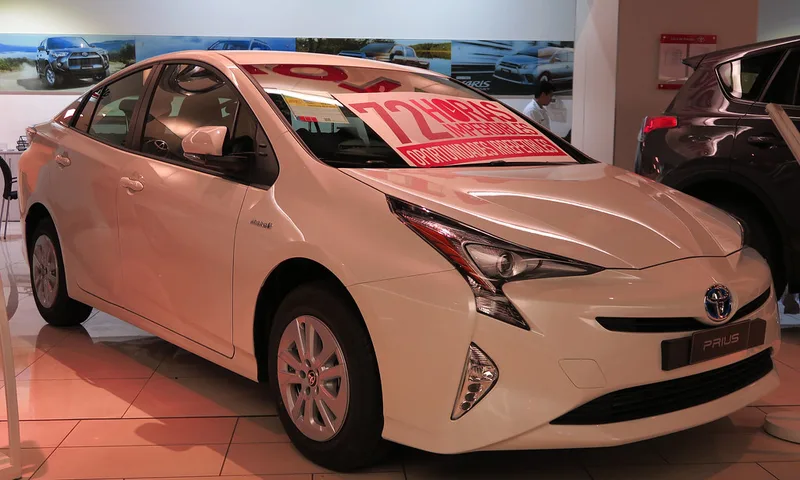
- Energy 7.9¢/mi
- Maintenance 2.7¢/mi
- Depreciation 9.8¢/mi
Energy, maintenance and depreciation only, at $4.08/gal. Insurance, registration and any car payment sit on top — add yours in the cost per mile calculator.
| Spec | Kia Niro | Toyota Prius |
|---|---|---|
| Combined MPG | 49 | 52 |
| kWh / 100 mi | — | — |
| Used price range | $8,093–$18,239 | $11,360–$20,150 |
| Maintenance per year | $377 | $408 |
| Seats | 5 | 5 |
| Cargo (cu ft) | 22.4 | 27.4 |
| Rear legroom (in) | 37.4 | 33.4 |
| Uber X | Yes | Yes |
| Uber Comfort | No | No |
| Uber XL | No | No |
Sources: Kia Niro — EPA fuel economy, maintenance estimates, used price guide, Uber vehicle requirements ; Toyota Prius — EPA fuel economy, maintenance estimates, used price guide, Uber vehicle requirements . Updated 2026-08-27.
The short answer
This is a genuine break-even comparison, one of the few in this dataset where the two cars actually trade places depending on mileage rather than one simply winning outright. The Kia Niro has the lowest used-price floor of any vehicle reviewed on this site — $8,093. The Prius costs less per mile — 20.4 cents against the Niro’s 24.3. Buy cheap and drive a little, and the Niro wins. Buy either and drive full-time for a few years, and the Prius’s lower running cost overtakes the Niro’s price advantage.
Cost per mile
The Niro’s 49 mpg combined against the Prius’s 52 mpg, both at $4.085 a gallon, works out to 8.3 cents a mile in fuel for the Niro against 7.9 cents for the Prius — roughly a 0.5-cent gap. Maintenance runs the other way, slightly: 2.5 cents a mile for the Niro against 2.7 cents for the Prius, a 0.2-cent edge for the Niro. Depreciation is where the real gap opens up: 13.5 cents a mile for the Niro against 9.8 cents for the Prius, a 3.7-cent-a-mile difference. Net the three together — the Niro’s roughly 0.5-cent fuel disadvantage and 3.7-cent depreciation disadvantage, minus its 0.2-cent maintenance edge — and the Niro costs about 4.0 cents a mile more overall: 24.3 cents against the Prius’s 20.4.
At a full-time driver’s 30,000-mile year, that gap is $1,194 a year: about $7,301 for the Niro against $6,107 for the Prius. The current 76-cent IRS mileage rate covers the Niro’s real cost 3.12 times over and the Prius’s 3.73 times over — both comfortable margins, with the Prius further ahead. Depreciation makes up 55.5 percent of the Niro’s total cost against 48.1 percent for the Prius, a 7.4-point gap that tracks with the Niro’s much lower purchase price — a cheaper car tends to lose a larger share of its value per mile even when it starts from a lower base.
Price — the Niro’s real strength
This Niro generation runs $8,093 to $18,239 used — the lowest floor of any vehicle in this dataset, $3,267 below the Prius’s $11,360 floor. At the ceiling the gap is smaller but still real: $18,239 against $20,150, a $1,911 difference. For a driver working with a tight budget, the Niro is simply the cheaper car to get into, at either end of its price range.
Break-even
This is the pair where the break-even calculator earns its keep — the two cars actually cross. Comparing the two cars at the bottom of their ranges, where the price gap is $3,267 and the running-cost gap is roughly 4.0 cents a mile, the crossover lands around 82,000 miles (3,267 divided by 0.040) — a little under three years of full-time driving. Comparing them at the top of their ranges, where the price gap narrows to $1,911, the same roughly 4.0-cent-a-mile gap closes it in about 48,000 miles, under two years. Either way, a driver planning to keep the car only briefly, or one for whom upfront cash is the binding constraint, comes out ahead with the Niro; a driver planning several years of full-time driving comes out ahead with the Prius, because the per-mile gap keeps compounding long after the purchase-price gap is paid back.
Space and body style
The two take different approaches to interior space despite similar footprints. The Prius, a hatchback, carries 27.4 cubic feet of cargo against the Niro’s 22.4 — a 5.0-cubic-foot edge for the Prius, despite the Niro being classified as a crossover, a body style usually associated with more cargo room, not less. The Niro wins the other space measure: 37.4 inches of rear legroom against the Prius’s 33.4, a 4.0-inch gap that makes the Niro the more comfortable car for rear-seat passengers on longer trips. Both seat five, and both are rated for Uber X only, with no Comfort or XL access on Uber’s own listing — eligibility does not separate this pair.
Does the depreciation gap ever close?
Because the roughly 4.0-cent-a-mile gap is driven almost entirely by depreciation — 3.7 of those 4.0 cents — it does not shrink as either car ages toward the end of its typical resale window the way a maintenance or fuel gap might. Both figures are per-mile averages built from each car’s used-price range at the mileage this dataset models, not a curve that flattens out over time, so a driver should not expect the Niro to “catch up” to the Prius’s cost-per-mile figure simply by holding onto it longer. The mileage math above already accounts for that: it is the purchase-price gap that shrinks as it gets divided across more miles, not the per-mile cost gap itself.
Which one to buy
A driver working with a limited budget, or one who does not plan to keep a vehicle long enough to reach the tens of thousands of miles where the Prius’s running-cost edge pays off, should buy the Niro — it is the cheapest vehicle to acquire in this entire dataset and gives up rear legroom for nothing in return. A driver planning several years of full-time driving should lean toward the Prius: its roughly 4.0-cent-a-mile running-cost edge compounds well past the point where the Niro’s lower purchase price stops mattering. Between them, the honest summary is that the Niro is the better car to buy and the Prius is the better car to have already owned for a while — a distinction that only matters if a driver actually expects to put full-time miles on whichever one they choose. Full breakdowns of both cars are in the Kia Niro review and the Toyota Prius review.