Comparison
Sonata Hybrid vs Camry Hybrid: Lower Price, No Comfort Access
Camry Hybrid wins on both running cost and Uber Comfort access. The Sonata Hybrid's only real edge is a lower price ceiling.
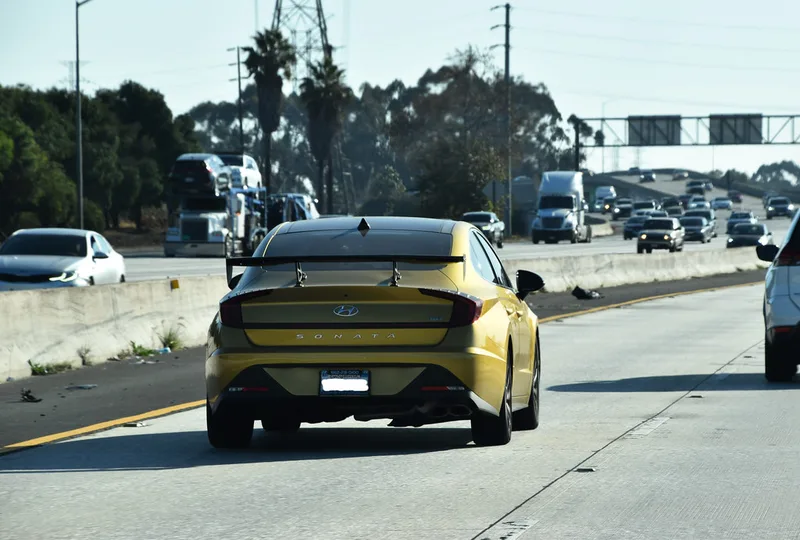
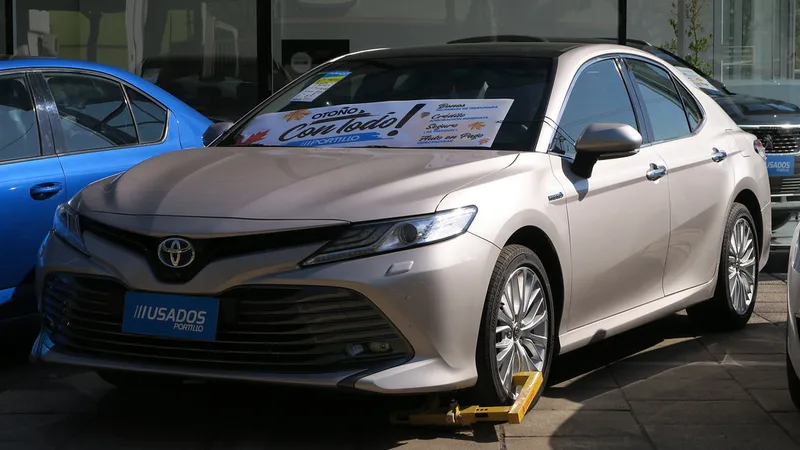
- Energy 8.7¢/mi
- Maintenance 3.1¢/mi
- Depreciation 13.9¢/mi
- Energy 7.9¢/mi
- Maintenance 2.9¢/mi
- Depreciation 12.0¢/mi
Energy, maintenance and depreciation only, at $4.08/gal. Insurance, registration and any car payment sit on top — add yours in the cost per mile calculator.
| Spec | Hyundai Sonata Hybrid | Toyota Camry Hybrid |
|---|---|---|
| Combined MPG | 47 | 52 |
| kWh / 100 mi | — | — |
| Used price range | $12,280–$18,550 | $13,290–$24,100 |
| Maintenance per year | $458 | $442 |
| Seats | 5 | 5 |
| Cargo (cu ft) | 16 | 15.1 |
| Rear legroom (in) | 34.8 | 38 |
| Uber X | Yes | Yes |
| Uber Comfort | No | Yes |
| Uber XL | No | No |
Sources: Hyundai Sonata Hybrid — EPA fuel economy, maintenance estimates, used price guide, Uber vehicle requirements ; Toyota Camry Hybrid — EPA fuel economy, maintenance estimates, used price guide, Uber vehicle requirements . Updated 2026-08-27.
The short answer
This is a lopsided comparison. The Camry Hybrid runs cheaper per mile, is Uber Comfort-eligible where the Sonata Hybrid is not, and has more rear legroom. The Sonata Hybrid’s case rests almost entirely on price — specifically, on how much less it costs at the top of its used-price range. Outside of that, the numbers favor the Camry Hybrid on nearly every measure.
Cost per mile
The Sonata Hybrid’s 47 mpg combined against the Camry Hybrid’s 52 mpg, both at $4.085 a gallon, works out to 8.7 cents a mile in fuel for the Sonata Hybrid against 7.9 cents for the Camry Hybrid — a 0.8-cent gap. Maintenance is close: 3.1 cents a mile for the Sonata Hybrid against 2.9 cents for the Camry Hybrid, a 0.2-cent gap. Depreciation is where the larger separation sits: 13.9 cents a mile for the Sonata Hybrid against 12.0 cents for the Camry Hybrid, a 1.9-cent gap. Add the three gaps together — 0.8 plus 0.2 plus 1.9 — and the total comes to 2.9 cents a mile: 25.7 cents for the Sonata Hybrid, 22.8 cents for the Camry Hybrid.
At a full-time driver’s 30,000-mile year, that 2.9-cent gap is $880 a year: about $7,707 for the Sonata Hybrid against $6,827 for the Camry Hybrid. The current 76-cent IRS mileage rate covers the Sonata Hybrid’s real cost 2.96 times over and the Camry Hybrid’s 3.34 times over — both comfortable margins, with the Camry Hybrid further ahead. Depreciation is 54.1 percent of the Sonata Hybrid’s total cost against 52.7 percent for the Camry Hybrid, a 1.4-point gap — close as a share, even though the Sonata Hybrid’s depreciation is 1.9 cents a mile higher in dollar terms.
Price
The Sonata Hybrid’s real advantage is here. This Sonata Hybrid generation runs $12,280 to $18,550 used, against the Camry Hybrid’s $13,290 to $24,100 — $1,010 cheaper at the floor, and a much wider $5,550 cheaper at the ceiling. A driver shopping toward the top of each range saves considerably more by choosing the Sonata Hybrid than one shopping at the floor, where the two are close to the same price.
Uber Comfort and cabin space
The Camry Hybrid clears Uber Comfort on Uber’s own eligibility listing; the Sonata Hybrid does not, and is rated for Uber X only — the same ceiling the Prius and RAV4 Hybrid run into elsewhere in this dataset. That locks the Sonata Hybrid out of the higher-paying Comfort tier entirely, regardless of trim or condition. Cabin space splits in the Sonata Hybrid’s favor on cargo — 16.0 cubic feet against the Camry Hybrid’s 15.1, a 0.9-cubic-foot edge — but the Camry Hybrid wins rear legroom clearly, 38.0 inches against the Sonata Hybrid’s 34.8, a 3.2-inch gap that matters directly for the Comfort-tier trips only the Camry Hybrid can actually take.
Break-even
Running the two through the break-even calculator shows how much the answer depends on which specific listings a driver is comparing. Buy both cars near the bottom of their ranges — $12,280 for the Sonata Hybrid, $13,290 for the Camry Hybrid, a $1,010 price edge for the Sonata Hybrid — and the Camry Hybrid’s 2.9-cent-a-mile running-cost edge erases that $1,010 in roughly 35,000 miles (1,010 divided by 0.029), a bit more than one year of full-time driving. Past that point the Camry Hybrid is cheaper overall and stays cheaper for the rest of the car’s life. The gap only really favors the Sonata Hybrid in the opposite matchup — a Sonata Hybrid near the bottom of its range against a Camry Hybrid near the top, an $11,820 price difference that the 2.9-cent-a-mile gap would take roughly 407,000 miles to close, far beyond any realistic ownership period. The calculator is built for exactly this — plugging in the two actual listings in front of a buyer, not a catalog average, to see which of these two very different outcomes actually applies.
Which one to buy
For a driver who wants Comfort-tier access, or who is comparing similarly priced listings, the Camry Hybrid is the stronger buy: cheaper per mile, more rear legroom, and eligible for a fare tier the Sonata Hybrid cannot reach on Uber’s own vehicle-eligibility listing, with no trim or condition able to change that. The Sonata Hybrid’s case is narrower and price-dependent — a driver who finds one near the bottom of its range against a Camry Hybrid near the top of its own gets a real upfront discount that would take hundreds of thousands of miles to erase, if a driver has no need for Comfort trips in the first place and is not comparing two listings priced close to each other. Full breakdowns of both cars are in the Hyundai Sonata Hybrid review and the Toyota Camry Hybrid review.