Comparison
RAV4 Hybrid vs Camry Hybrid: Cargo Space vs Cost Per Mile
Camry Hybrid for cost and Comfort access. RAV4 Hybrid only if delivery or bulky-item runs genuinely need its extra 22.5 cubic feet of cargo.
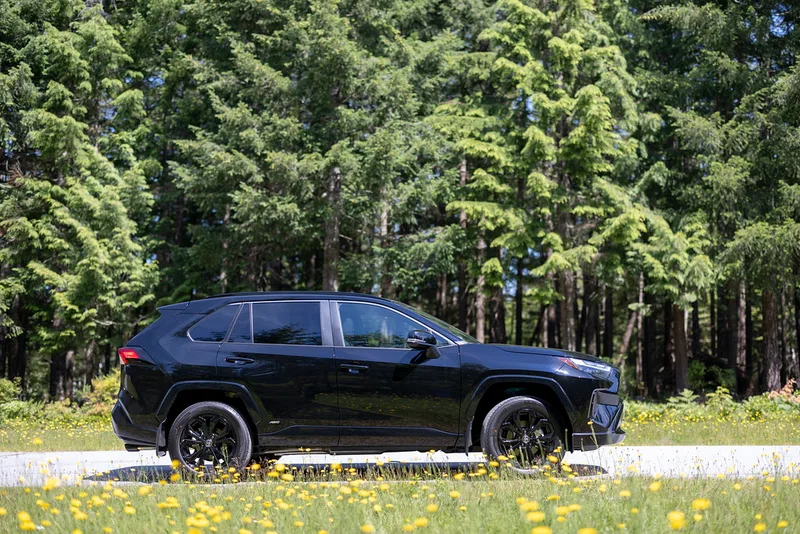
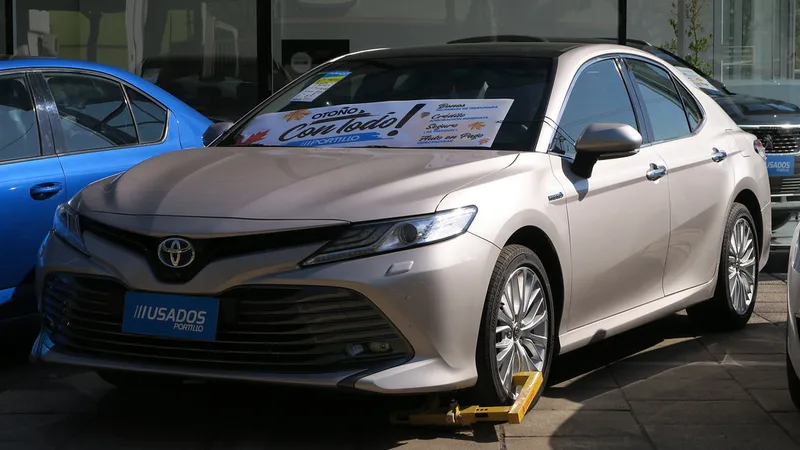
- Energy 10.2¢/mi
- Maintenance 2.9¢/mi
- Depreciation 16.4¢/mi
- Energy 7.9¢/mi
- Maintenance 2.9¢/mi
- Depreciation 12.0¢/mi
Energy, maintenance and depreciation only, at $4.08/gal. Insurance, registration and any car payment sit on top — add yours in the cost per mile calculator.
| Spec | Toyota RAV4 Hybrid | Toyota Camry Hybrid |
|---|---|---|
| Combined MPG | 40 | 52 |
| kWh / 100 mi | — | — |
| Used price range | $18,160–$30,450 | $13,290–$24,100 |
| Maintenance per year | $429 | $442 |
| Seats | 5 | 5 |
| Cargo (cu ft) | 37.6 | 15.1 |
| Rear legroom (in) | 37.8 | 38 |
| Uber X | Yes | Yes |
| Uber Comfort | No | Yes |
| Uber XL | No | No |
Sources: Toyota RAV4 Hybrid — EPA fuel economy, maintenance estimates, used price guide, Uber vehicle requirements ; Toyota Camry Hybrid — EPA fuel economy, maintenance estimates, used price guide, Uber vehicle requirements . Updated 2026-08-27.
The short answer
These two share a badge and a hybrid drivetrain, and little else once the numbers are laid out. The RAV4 Hybrid carries 37.6 cubic feet of cargo against the Camry Hybrid’s 15.1 — 22.5 cubic feet more, close to two and a half times the space. It pays for that with a running cost of 29.5 cents a mile against the Camry Hybrid’s 22.8, a 6.8-cent-a-mile gap — the widest between any two vehicles compared on this site. Unless a driver’s actual work — bulky delivery, oversized rideshare luggage, gear hauling — needs that cargo space, the Camry Hybrid is the cheaper car by a wide margin.
Cost per mile
The RAV4 Hybrid’s 40 mpg combined against the Camry Hybrid’s 52 mpg, both at $4.085 a gallon, works out to 10.2 cents a mile in fuel for the RAV4 Hybrid against 7.9 cents for the Camry Hybrid — about a 2.4-cent gap. Maintenance is identical at 2.9 cents a mile for both cars, so it does not move the comparison either way. Depreciation is where the real separation sits: 16.4 cents a mile for the RAV4 Hybrid against 12.0 cents for the Camry Hybrid, a 4.4-cent-a-mile gap. Add the fuel gap and the depreciation gap — 2.4 cents plus 4.4 cents — and the total comes to the full 6.8-cent-a-mile difference between the two: 29.5 cents for the RAV4 Hybrid, 22.8 cents for the Camry Hybrid.
At a full-time driver’s 30,000-mile year, that 6.8-cent gap becomes $2,027 a year: about $8,854 for the RAV4 Hybrid against $6,827 for the Camry Hybrid. The current 76-cent IRS mileage rate covers the RAV4 Hybrid’s real cost 2.58 times over and the Camry Hybrid’s 3.34 times over — both are covered, but the Camry Hybrid clears the benchmark by a considerably wider margin. Depreciation is 55.6 percent of the RAV4 Hybrid’s total cost against 52.7 percent for the Camry Hybrid — close as a share, even though the RAV4 Hybrid’s depreciation is 4.4 cents a mile higher in absolute terms, because its whole per-mile cost is larger.
Cargo and cabin space
Cargo is the RAV4 Hybrid’s entire case. Its 37.6 cubic feet is the most of any hybrid in this dataset, and the 22.5-cubic-foot gap over the Camry Hybrid’s 15.1-cubic-foot trunk is not a marginal edge — it is the difference between a sedan trunk and a compact SUV’s cargo hold, relevant for a driver doing bulky delivery runs, hauling equipment, or regularly carrying luggage for groups rather than solo airport riders. Rear legroom is essentially tied: 37.8 inches for the RAV4 Hybrid against 38.0 for the Camry Hybrid, a 0.2-inch difference that will not register to a passenger either way.
Price and eligibility
Price moves in the same direction as running cost. This RAV4 Hybrid generation runs $18,160 to $30,450 used, against the Camry Hybrid’s $13,290 to $24,100 — $4,870 more at the floor, $6,350 more at the ceiling. Eligibility also favors the Camry Hybrid: it clears Uber Comfort on Uber’s own listing, while the RAV4 Hybrid is rated for Uber X only, with no Comfort or XL access. A driver who wants both the higher-paying Comfort tier and the lower running cost gets both from the Camry Hybrid; the RAV4 Hybrid offers neither.
Break-even
Running these two through the break-even calculator with the RAV4 Hybrid priced higher and running higher per mile should return no crossover — the Camry Hybrid wins on both axes across the realistic range of used prices for each car, the same shape of result as the Prius against the Camry Hybrid elsewhere on this site. There is no purchase-price discount on a RAV4 Hybrid large enough to offset a 6.8-cent-a-mile running-cost gap at any meaningful mileage; the calculator exists to make that kind of gap visible rather than assumed. The decision here is not really a cost decision at all — it’s whether the cargo space earns its cost, a question the cost-per-mile calculator can help quantify against a specific delivery contract’s per-trip cargo requirements.
Which one to buy
For a driver working standard rideshare — passengers, modest luggage, occasional airport runs — the Camry Hybrid wins outright: cheaper to buy, 6.8 cents a mile cheaper to run, and Uber Comfort-eligible on top of it. The RAV4 Hybrid only makes sense for a driver whose actual work depends on the extra 22.5 cubic feet of cargo — large-item delivery, equipment hauling, or a market where SUV-based trips are a meaningful share of demand — and even then, that driver is paying $2,027 a year for the space. That is a real number to weigh against whatever a cargo-dependent contract or delivery volume actually pays, not a cost to absorb on the assumption that more space is automatically worth more money. Full breakdowns of both cars are in the Toyota RAV4 Hybrid review and the Toyota Camry Hybrid review.