Comparison
Camry Hybrid vs Accord Hybrid: Two Comfort Cars, One Roomier
Accord Hybrid for rear-seat room and a lower price ceiling. Camry Hybrid for slightly better fuel economy. Both clear Uber Comfort equally.
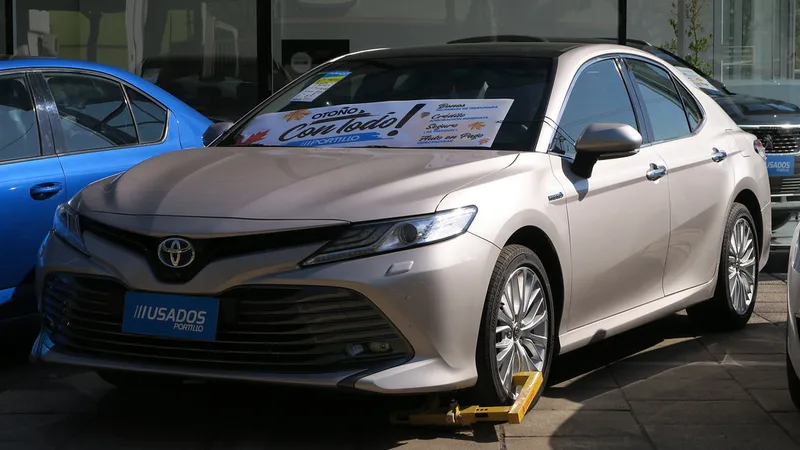
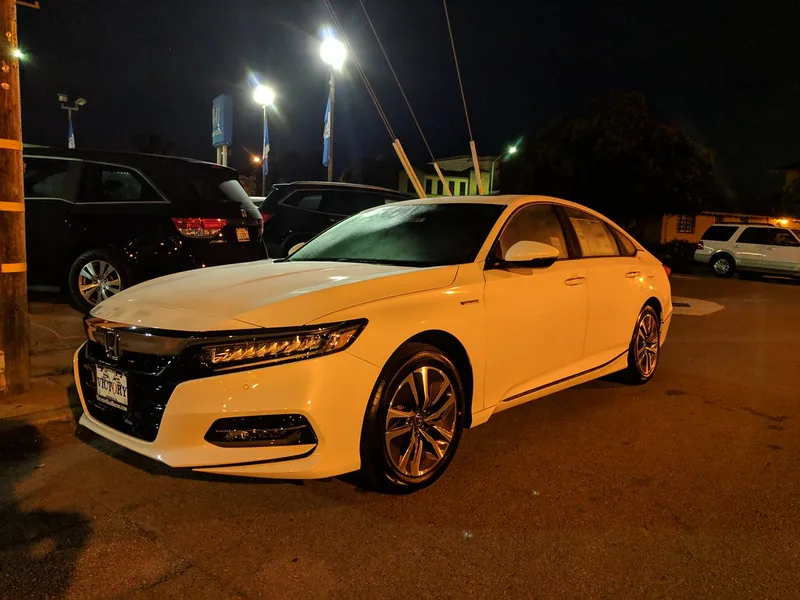
- Energy 7.9¢/mi
- Maintenance 2.9¢/mi
- Depreciation 12.0¢/mi
- Energy 8.5¢/mi
- Maintenance 2.7¢/mi
- Depreciation 11.4¢/mi
Energy, maintenance and depreciation only, at $4.08/gal. Insurance, registration and any car payment sit on top — add yours in the cost per mile calculator.
| Spec | Toyota Camry Hybrid | Honda Accord Hybrid |
|---|---|---|
| Combined MPG | 52 | 48 |
| kWh / 100 mi | — | — |
| Used price range | $13,290–$24,100 | $13,250–$20,100 |
| Maintenance per year | $442 | $400 |
| Seats | 5 | 5 |
| Cargo (cu ft) | 15.1 | 16.7 |
| Rear legroom (in) | 38 | 40.4 |
| Uber X | Yes | Yes |
| Uber Comfort | Yes | Yes |
| Uber XL | No | No |
Sources: Toyota Camry Hybrid — EPA fuel economy, maintenance estimates, used price guide, Uber vehicle requirements ; Honda Accord Hybrid — EPA fuel economy, maintenance estimates, used price guide, Uber vehicle requirements . Updated 2026-08-27.
The short answer
Unlike most pairs on this site, this one is not decided by Uber’s eligibility rules — the Camry Hybrid and Accord Hybrid both clear Uber Comfort, both clear Uber X, and neither clears Uber XL. The question is which car does the job better, and the numbers say: nearly identically on cost, with the Accord Hybrid ahead on cabin space and the top end of its price range.
Cost per mile
The Camry Hybrid runs at 22.8 cents a mile total, the Accord Hybrid at 22.6 cents — a 0.1-cent-a-mile gap once the underlying figures are compared precisely, the closest total-cost margin of any two sedans in this dataset. The two get there differently. The Camry Hybrid’s 52-mpg combined rating beats the Accord Hybrid’s 48 mpg, which at $4.085 a gallon works out to 7.9 cents a mile in fuel for the Camry Hybrid against 8.5 cents for the Accord Hybrid — about a 0.7-cent fuel edge for the Camry Hybrid. The Accord Hybrid claws that back and then some elsewhere: 2.7 cents a mile in maintenance against the Camry Hybrid’s 2.9 cents, and 11.4 cents a mile in depreciation against the Camry Hybrid’s 12.0 cents. Add the maintenance and depreciation edges together — 0.2 cents plus 0.6 cents — and the Accord Hybrid’s 0.8-cent advantage there outweighs the Camry Hybrid’s 0.7-cent fuel advantage by the 0.1 cent that separates their totals.
At a full-time driver’s 30,000 miles a year, that gap is $44 a year: about $6,827 a year for the Camry Hybrid, $6,783 for the Accord Hybrid. Both clear the current 76-cent IRS mileage rate comfortably — 3.34 times over for the Camry Hybrid, 3.36 times over for the Accord Hybrid. Depreciation is a larger share of the Camry Hybrid’s total cost (52.7 percent) than the Accord Hybrid’s (50.4 percent), meaning the used-price spread matters slightly more to the Camry Hybrid’s economics, but neither figure is unusual for a hybrid sedan in this dataset.
Space and comfort
This is where the Accord Hybrid pulls ahead more clearly. Rear legroom is 40.4 inches on the Accord Hybrid against 38.0 inches on the Camry Hybrid, a 2.4-inch gap that a rear-seat passenger will notice on any trip longer than a few minutes. Cargo space follows the same pattern: 16.7 cubic feet in the Accord Hybrid’s trunk against 15.1 cubic feet in the Camry Hybrid’s, a 1.6-cubic-foot edge for the Accord Hybrid. Neither gap is enormous, but both point the same direction — the Accord Hybrid is the roomier car for passengers and luggage alike, which matters more for Comfort-tier trips than for Uber X runs, since Comfort riders are the ones paying for extra space in the first place.
Price
This is the other place the two diverge. At the low end, the two are nearly the same car to buy: this Camry Hybrid generation starts around $13,290 used, this Accord Hybrid generation around $13,250 — a $40 difference, effectively a rounding error. The gap opens at the high end: the Camry Hybrid tops out around $24,100, the Accord Hybrid around $20,100, a $4,000 difference. A driver shopping toward the top of each range pays a real premium for the Camry Hybrid nameplate without a corresponding gain in cost per mile, legroom, or cargo — on every one of those measures, the Accord Hybrid is either equal or ahead.
Break-even
Feeding both cars’ cost-per-mile figures and purchase prices into the break-even calculator mostly restates what’s above: the Accord Hybrid is cheaper to run per mile and, across most of its price range, cheaper or equal to buy, so there is little room for a Camry Hybrid price advantage to show up. The exception is a driver who finds a Camry Hybrid priced near the bottom of its range and an Accord Hybrid priced near the top of its own — in that specific matchup the two are close enough that either could edge ahead depending on the exact prices in front of a buyer, which is exactly the kind of real-listing comparison the calculator is built to run rather than catalog averages. For a driver weighing a car payment against expected Comfort earnings, the rideshare profit calculator turns either car’s cost-per-mile figure into a weekly net-earnings estimate once fares and hours are entered.
Which one to buy
For a driver who already knows they want Comfort-tier access, the deciding factor between these two is rarely the fuel gauge — both are close enough on running cost that the choice comes down to cabin space and price. The Accord Hybrid’s extra 2.4 inches of rear legroom and 1.6 cubic feet of cargo, paired with a used-price ceiling $4,000 below the Camry Hybrid’s, make it the stronger buy for a driver focused on passenger comfort per dollar. The Camry Hybrid’s case is narrower: a slightly better fuel economy number and, for some drivers, stronger resale demand and brand recognition that do not show up in this dataset’s cost model. Full breakdowns of both cars are in the Toyota Camry Hybrid review and the Honda Accord Hybrid review.