Comparison
Sienna vs Odyssey: Both Uber XL Only, One Costs Far Less
Sienna for running cost and seating. Odyssey only if its much lower purchase-price floor matters more than 4.4 cents a mile in extra running cost.
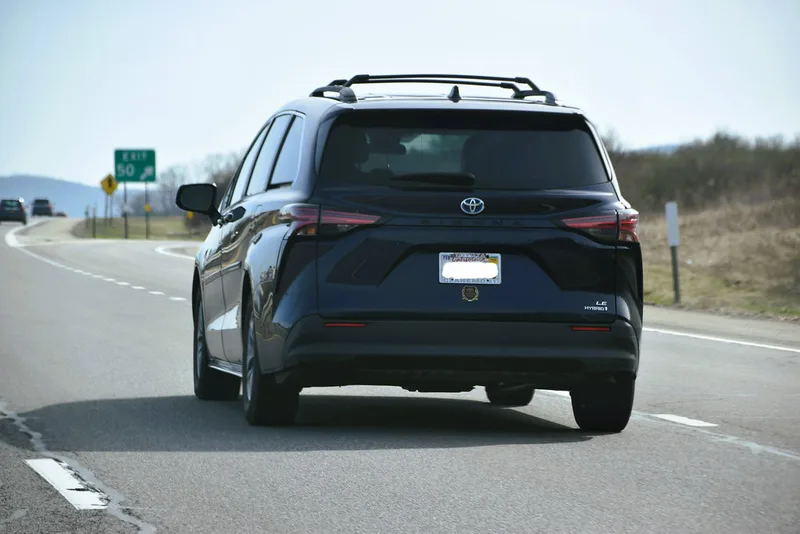
- Energy 11.3¢/mi
- Maintenance 3.7¢/mi
- Depreciation 23.4¢/mi
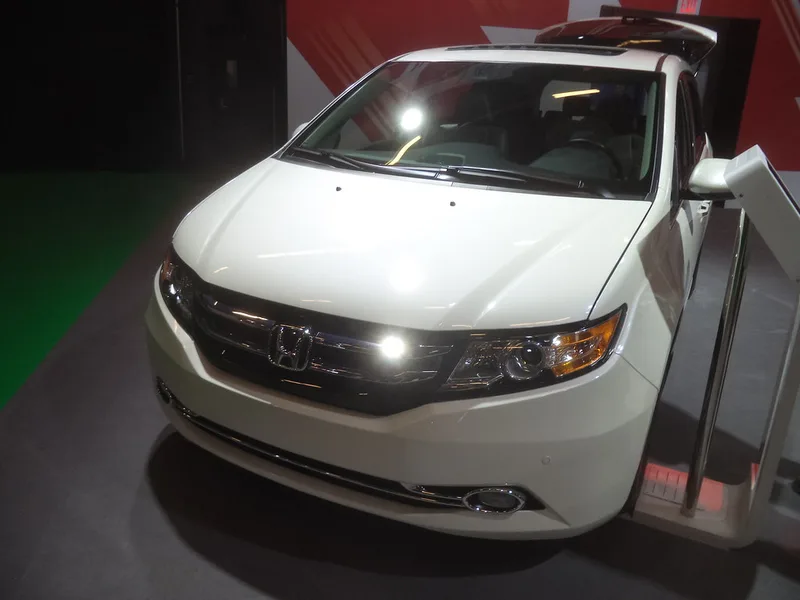
- Energy 18.6¢/mi
- Maintenance 3.6¢/mi
- Depreciation 20.7¢/mi
Energy, maintenance and depreciation only, at $4.08/gal. Insurance, registration and any car payment sit on top — add yours in the cost per mile calculator.
| Spec | Toyota Sienna | Honda Odyssey |
|---|---|---|
| Combined MPG | 36 | 22 |
| kWh / 100 mi | — | — |
| Used price range | $27,590–$38,120 | $14,228–$35,914 |
| Maintenance per year | $554 | $547 |
| Seats | 8 | 7 |
| Cargo (cu ft) | 33.5 | 32.8 |
| Rear legroom (in) | 39.9 | 38.1 |
| Uber X | No | No |
| Uber Comfort | No | No |
| Uber XL | Yes | Yes |
Sources: Toyota Sienna — EPA fuel economy, maintenance estimates, used price guide, Uber vehicle requirements ; Honda Odyssey — EPA fuel economy, maintenance estimates, used price guide, Uber vehicle requirements . Updated 2026-08-27.
The short answer
These two are the only Uber XL-eligible vehicles in this dataset, and neither one is eligible for Uber X or Comfort — both are locked to the XL tier on Uber’s own vehicle-eligibility listing, full stop. Between them, the choice comes down to running cost against upfront price. The Sienna’s hybrid drivetrain makes it meaningfully cheaper to run, 38.4 cents a mile against the Odyssey’s 42.9 cents. The Odyssey’s gas-only version of the same body style is dramatically cheaper to buy at the low end of its price range.
Cost per mile
The gap starts at the pump. The Odyssey’s 22 mpg combined against the Sienna’s 36 mpg, both at $4.085 a gallon, works out to 18.6 cents a mile in fuel for the Odyssey against 11.3 cents for the Sienna — about a 7.2-cent-a-mile gap, the widest fuel-cost gap of any pair compared on this site. Maintenance is close to a wash: 3.7 cents a mile for the Sienna against 3.6 cents for the Odyssey, a 0.1-cent edge for the Odyssey. Depreciation runs the other way and takes back some of the Odyssey’s ground: 23.4 cents a mile for the Sienna against 20.7 cents for the Odyssey, a 2.7-cent edge for the Odyssey.
Net the three together — the Odyssey’s roughly 7.2-cent fuel disadvantage, minus its 0.1-cent maintenance edge, minus its 2.7-cent depreciation edge — and the Odyssey still costs about 4.4 cents a mile more overall: 42.9 cents against the Sienna’s 38.4. At a full-time driver’s 30,000-mile year, that is $1,326 a year: about $12,860 for the Odyssey against $11,534 for the Sienna — the two highest annual running costs of any vehicle in this dataset, a direct consequence of minivan-scale depreciation on top of either a large gas engine or a heavier hybrid system. The current 76-cent IRS mileage rate covers the Sienna’s real cost 1.98 times over and the Odyssey’s just 1.77 times over — both are the thinnest margins over the federal benchmark of any vehicles reviewed on this site.
Depreciation makes up a much larger share of the Sienna’s total cost — 60.9 percent — than the Odyssey’s 48.3 percent, a 12.6-point gap. That is not because the Odyssey depreciates faster in dollar terms — it does not, its 20.7-cent depreciation is lower than the Sienna’s 23.4 — but because the Odyssey’s fuel bill is so much larger that it dilutes depreciation’s share of the total, the same pattern seen in the Corolla Hybrid-versus-Civic comparison elsewhere on this site.
Price
This is the Odyssey’s strongest argument. This Odyssey generation runs $14,228 to $35,914 used — a $13,362 lower floor than the Sienna’s $27,590 to $38,120 range. At the ceiling the gap nearly closes: the Sienna tops out $2,206 higher than the Odyssey. A driver shopping toward the bottom of each range finds the Odyssey dramatically cheaper to acquire; a driver shopping near the top finds the two close to the same price, at which point the Sienna’s lower running cost matters far more.
Seating, cargo, and Uber XL
Both vehicles exist for the same reason: Uber XL access, which requires more seats and cargo room than a sedan or crossover offers. Neither is Uber X-eligible on Uber’s own listing — a driver buying either car is committing to XL-only fares, or delivery work, exclusively. The Sienna seats eight against the Odyssey’s seven, one more seat. Cargo space favors the Sienna too, 33.5 cubic feet against 32.8, a 0.7-cubic-foot edge. Rear legroom also favors the Sienna: 39.9 inches against the Odyssey’s 38.1, a 1.8-inch gap — a real difference for a third-row passenger, if a modest one.
Break-even
Feeding both cars into the break-even calculator tells two different stories depending on where in each range the actual listings sit. Compare an Odyssey near the bottom of its range against a Sienna near the bottom of its own — a $13,362 price gap — against a roughly 4.4-cent-a-mile running-cost disadvantage for the Odyssey, and the crossover lands around 304,000 miles (13,362 divided by 0.044), well past any realistic ownership period; the cheap Odyssey stays cheaper the whole time. Compare two vehicles near the top of their ranges instead, where the price gap narrows to about $2,206 in the Sienna’s favor, and the same roughly 4.4-cent-a-mile gap closes that in about 50,000 miles — under two years of full-time driving — after which the Sienna is the cheaper vehicle overall. The actual listing prices in front of a buyer decide which of these applies.
Which one to buy
A driver who needs XL access on a tight budget and can find a well-priced used Odyssey gets real savings up front that a Sienna at a comparable price point cannot match — the Odyssey’s low-end pricing is its whole case. A driver comparing similarly priced vans, or buying toward the top of either range, should take the Sienna: it is markedly cheaper to run, seats one more passenger, and edges out the Odyssey on cargo and rear legroom. Full breakdowns of both cars are in the Toyota Sienna review and the Honda Odyssey review.